Original: $583.20
-70%$583.20
$174.96The Story
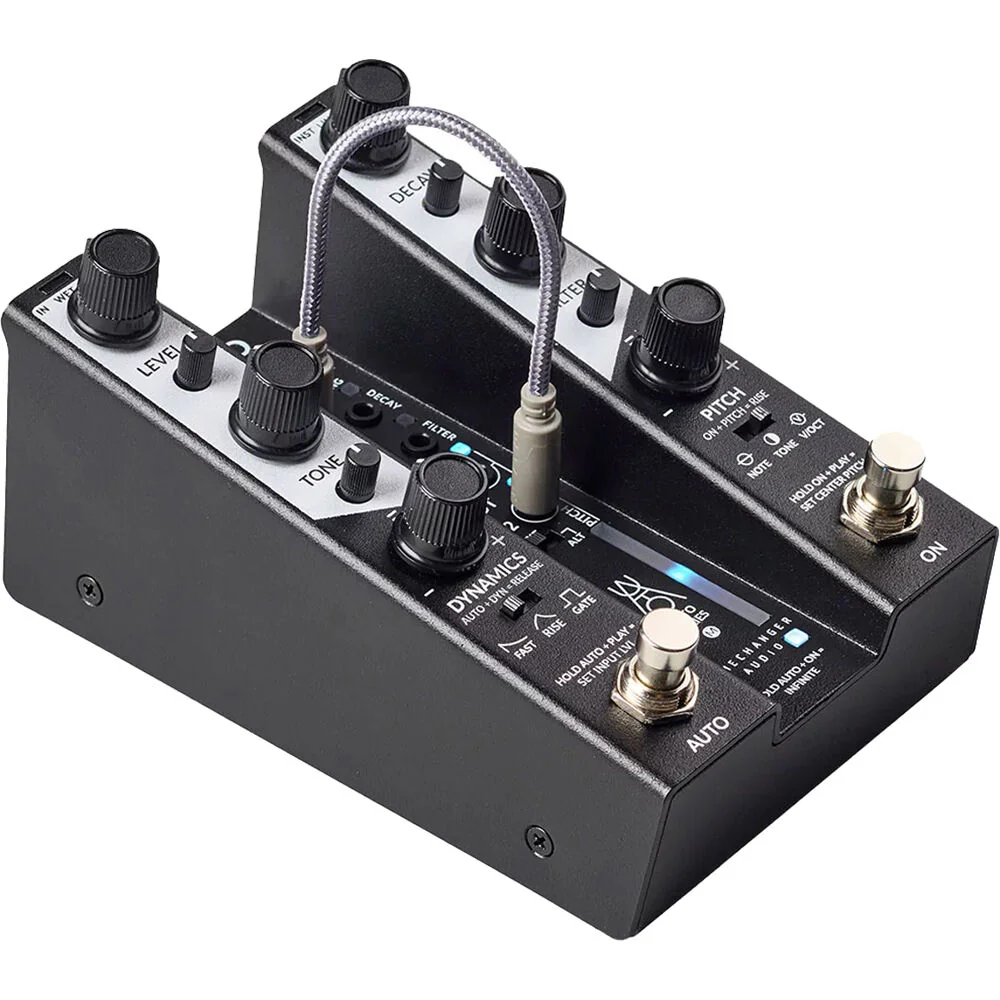
GAMECHANGER AUDIO GCAAUTOMRE Overview
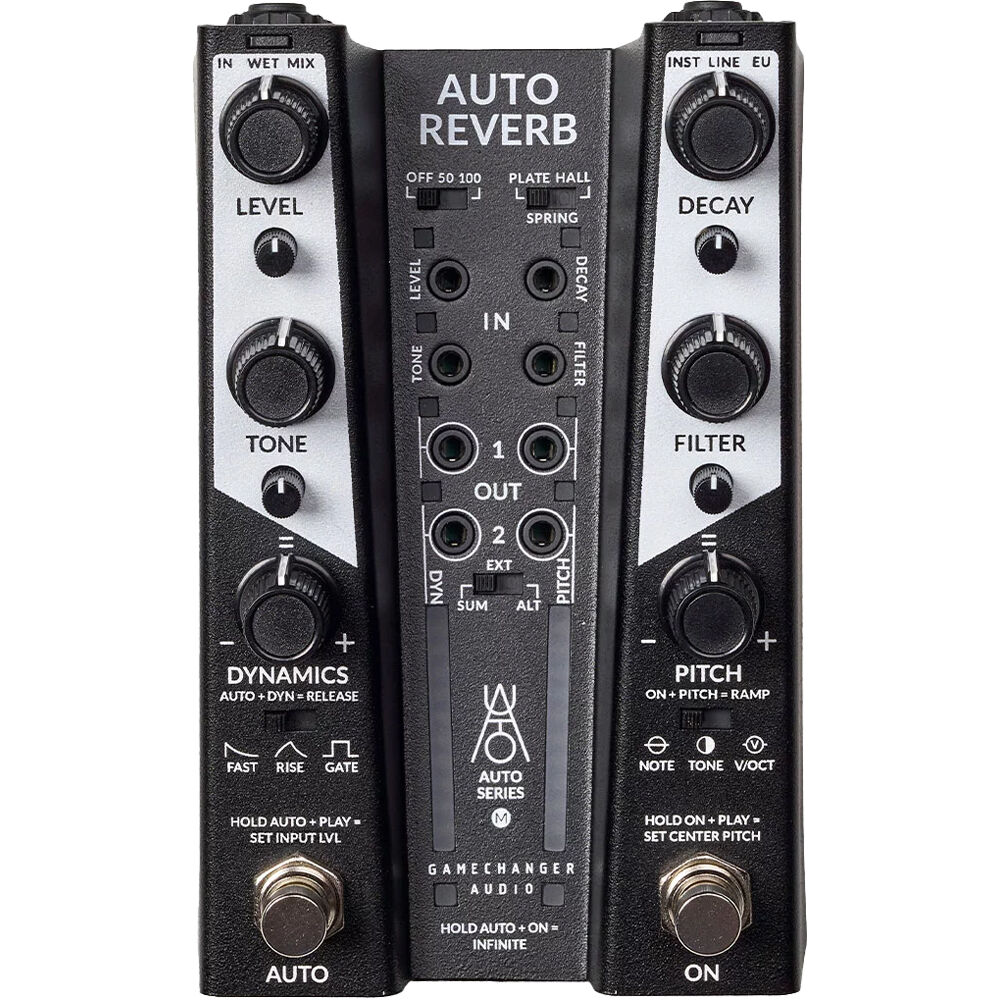
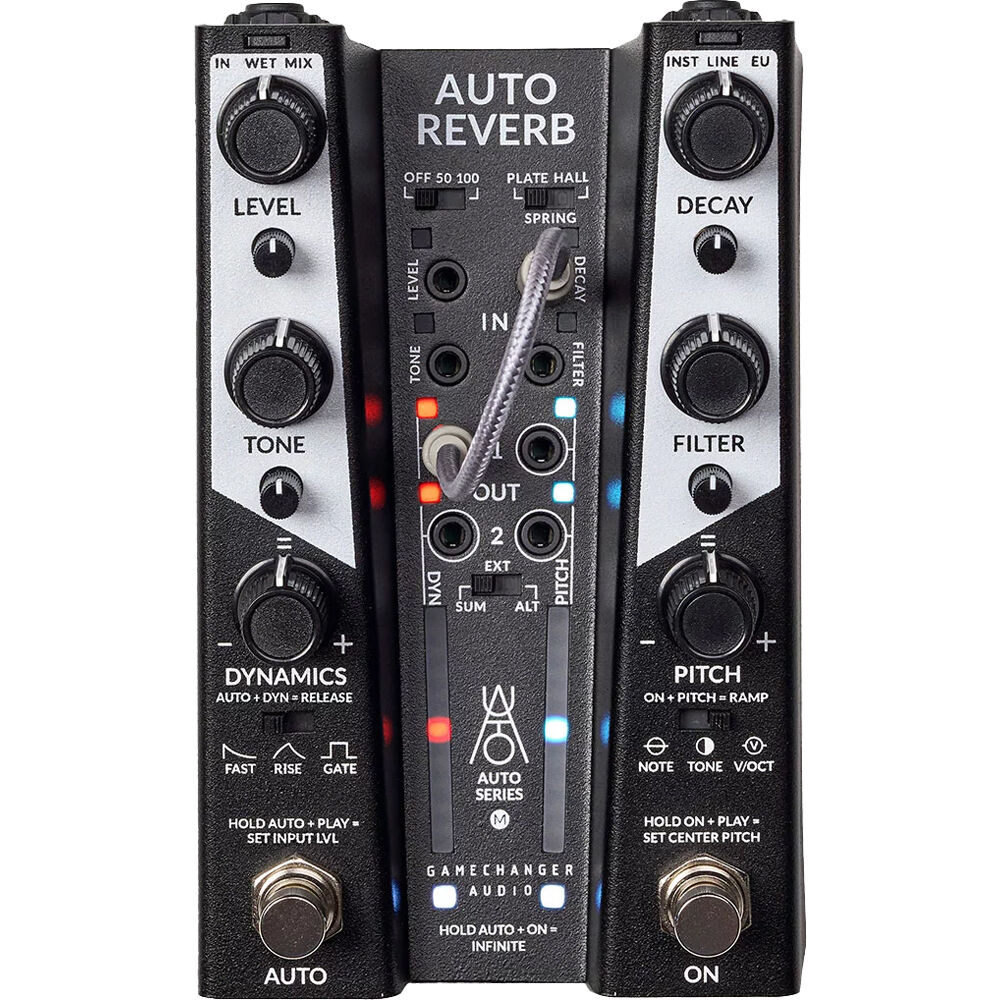
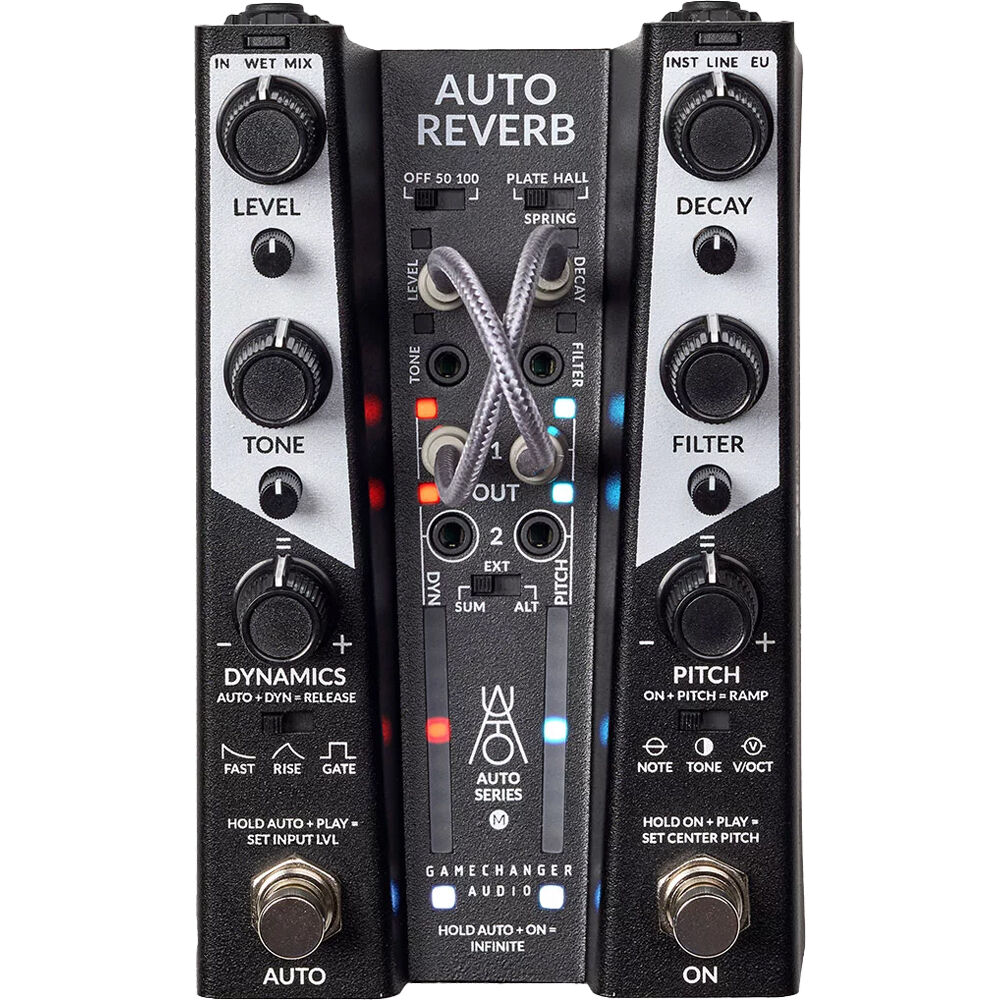
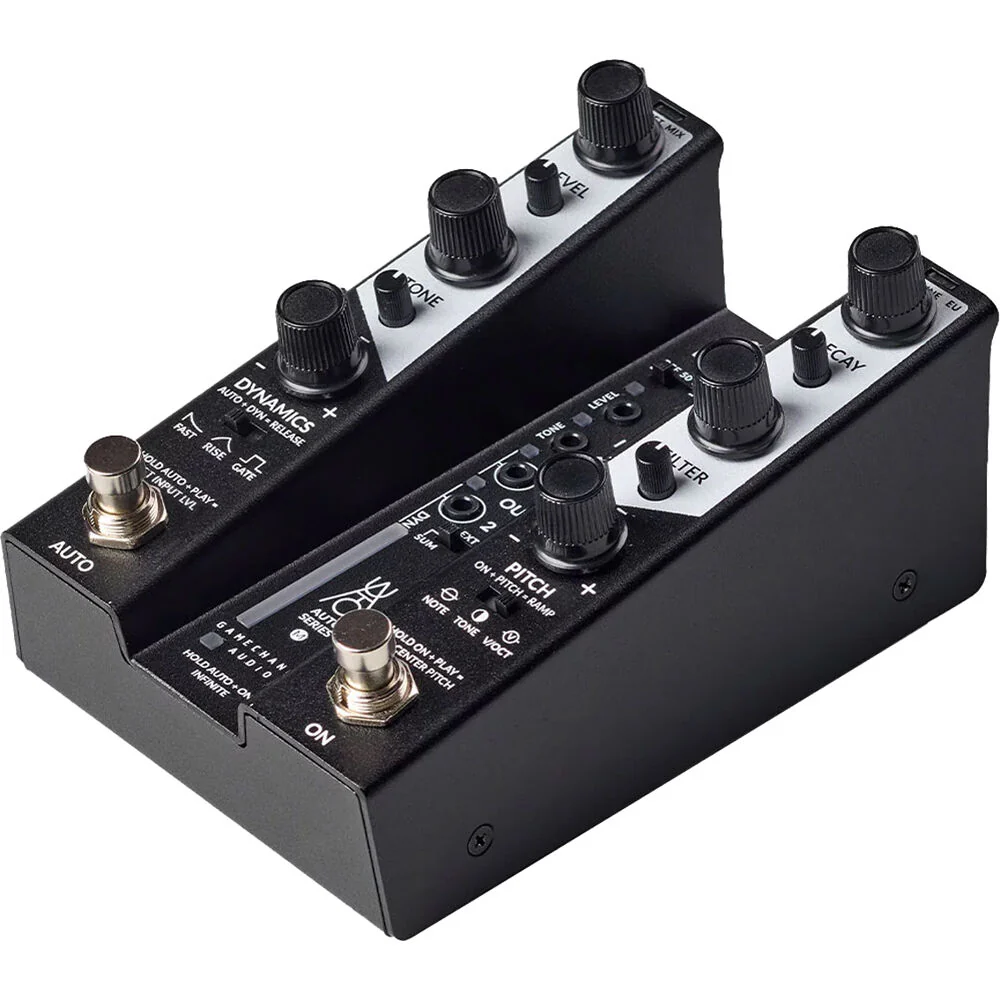
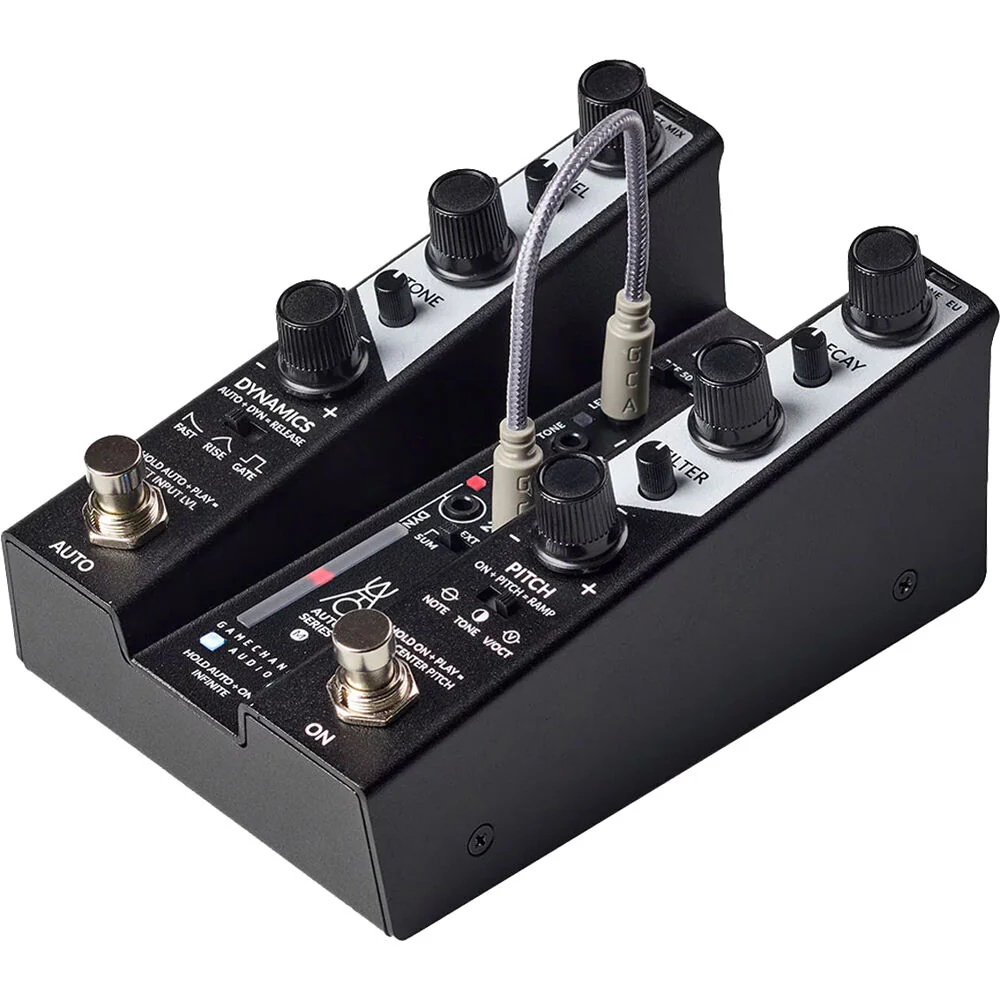
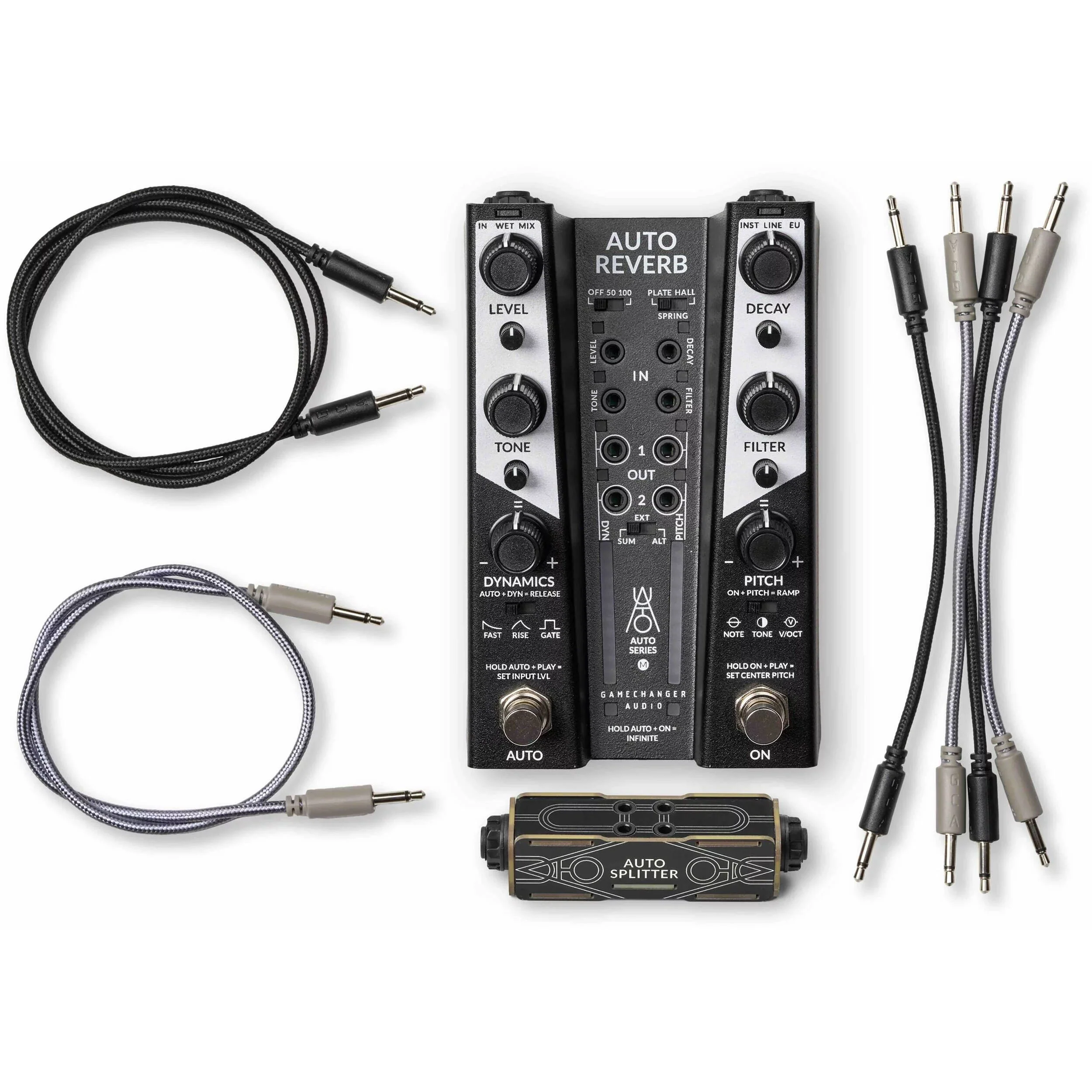
Via the two precise Dynamics and Pitch trackers, you have numerous expressive methods of generating signals for internal or external CV patching. You can select between 0, 50, and 100% stereo spread as well as three Dynamics and Pitch modes. You can also select three Automation modes. LEDs indicate CV signal input or output, and two dedicated LED meters are used to display Dynamics and Pitch signal information in real time. With a plethora of connectivity, including stereo 1/4" inputs and outputs, 3.5mm MIDI and Track inputs, USB-C, and the super versatile 3.5mm patchbay, you can experiment endlessly with external trigger sources, signal chains, electronic ecosystems, and oodles of modular tweaking.
- Automation is achieved by sending a CV into a parameter CV input and adjusting the mini knob
- Two tracker engines are offered: Dynamics and Pitch
- Each tracker has two identical outputs on the patchbay
- Use external CV sources to automate parameters, such as LFOs, sequencers, EGs, and more
- Sum mode: positive CV signals will move the parameter value in the direction the knob is set clockwise, while negative CV signals will move the parameter towards counterclockwise knob positions.
- External mode: allows you to apply the Dynamic or Pitch tracker outputs onto any external CV source to create a variety of ducking and gating effects.
- Alt mode: allows you to use the Auto knobs to set up Alternative parameter values. When the Auto footswitch is engaged, all parameters that have a patch cable inserted will instantly jump to the value dialed in by the Auto knob.
- Fast mode: fine-tuned to react to strums and sudden note onsets, this mode produces a sharp increase in CV once the threshold is crossed. The Release parameter determines the rate at which the CV value will fall during sustains.
- Rise mode: the Rise mode responds gradually to your playing dynamics and produces a continuous increase in CV whenever the input signal exceeds the threshold value. Release determines the rate at which he CV value will fall.
- Gate mode: this mode is designed to produce rapid on/off automations, jumping to the maximum output value once the threshold is crossed. The Release parameter adjust the duration of the On state.
- Plate: this algorithm is characterized by slightly metallic and bright overtones typical of studio plate reverbs. The bright overtones can be tamed or exaggerated with the Tone and Filter knobs.
- Spring: with Spring, the algorithm precisely mimics the drippy response of guitar amplifier spring reverb tanks. The tonal response is even more metallic than the Plate reverb.
- Hall: by using the Hall algorithm, you can place your input signal in a physical space, from small reverb chambers to infinitely huge halls. The smooth diffusion can achieve synthesizer pad-type sounds on high Decay settings.
- Decay is used to adjust the length of the reverb. The maximum setting produces an infinitely long decay.
- Tone control adjusts the tonal character of the reverb engine on the input stage, mimicking a change in the resonator's physical properties. Adjusting or automating Tone will apply to all incoming signals without affecting the active reverb tails.
- Filter adjusts the reverb engine's output signal. Contrary to the Tone knob, adjusting or automating Filter will boost and/or shave off frequencies from the reverb tails.
- Note mode: using Note mode, you can produce positive CV using any signal note as the reference point.
- Tone mode: rather than tracking specific notes, Tone mode analyzes the input frequency spectrum, allowing you to generate CV based on your instrument's tonal characteristics.
- V/Oct mode: this mode uses the pitch tracker to generate precise bipolar CV output. The calibrated note will produce a 0V output, and notes above or below the calibrated value will produce positive or negative CV output respectively.
- Stereo or mono signal processing via either two 1/4" TS mono cables or one 1/4" TRS stereo cable
- Switchable input level: instrument, line, or Eurorack
- Selectable Level knob functionality: Input Level + Dry Sound, Input Level + Killdry, or Dry/Wet Mix
- MIDI/Clock input for MIDI clock or analog trigger sync for time-based effects
- USB-C for MIDI and updates
Items Included
- GAMECHANGER AUDIO Auto Series Modular Auto Reverb Pedal
- 4 x 3.5mm Patch Cable
- Limited Lifetime Warranty
Not Included
- Essential Power Supplies
Additional Resources
GAMECHANGER AUDIO GCAAUTOMRE Specs
| USB I/O |
1 x USB-C Integrated Male Input/Output
|
| Audio I/O |
2x 1/4" Hi-Z/Instrument Input (1 Stereo TS Pair or 1 Stereo TRS (R Only))
1x 1/8" / 3.5 mm TRS MIDI Input (MIDI or Click) 1x 1/8" / 3.5 mm TRS Input (Track) 4x 1/8" / 3.5 mm TS Input (CV Level, Rate, Depth, and Feedback) 2x 1/4" Line Output (1 Stereo TS Pair or 1 Stereo TRS (R Only)) 1x 1/8" / 3.5 mm TRS Output (Track) 4x 1/8" / 3.5 mm TS Output (Dynamics and Pitch CV) |
| Power Source |
AC Adapter with Power Brick (Not Included), USB
|
| DC Input Power |
5 to 9 VDC at 250 to 1000 mA
|
| Operating Current |
250 mA (Typical)
|
| Color |
Black / Blue
|
| Material of Construction |
Metal
|
| Dimensions |
6 x 4 x 3" / 15.2 x 10.2 x 7.6 cm (L x W x H)
|
| Weight |
1.3 lb / 0.6 kg
|
All product and company names are trademarks™ or registered® trademarks of their respective holders. Use of them does not imply any affiliation with or endorsement by them.
Details & Craftsmanship
Every detail has been carefully considered to bring you the perfect product.
Details & Craftsmanship
Every detail has been carefully considered to bring you the perfect product.
Details & Craftsmanship
Every detail has been carefully considered to bring you the perfect product.
Details & Craftsmanship
Every detail has been carefully considered to bring you the perfect product.
Details & Craftsmanship
Every detail has been carefully considered to bring you the perfect product.
Details & Craftsmanship
Every detail has been carefully considered to bring you the perfect product.
Description
GAMECHANGER AUDIO GCAAUTOMRE Overview
Via the two precise Dynamics and Pitch trackers, you have numerous expressive methods of generating signals for internal or external CV patching. You can select between 0, 50, and 100% stereo spread as well as three Dynamics and Pitch modes. You can also select three Automation modes. LEDs indicate CV signal input or output, and two dedicated LED meters are used to display Dynamics and Pitch signal information in real time. With a plethora of connectivity, including stereo 1/4" inputs and outputs, 3.5mm MIDI and Track inputs, USB-C, and the super versatile 3.5mm patchbay, you can experiment endlessly with external trigger sources, signal chains, electronic ecosystems, and oodles of modular tweaking.
- Automation is achieved by sending a CV into a parameter CV input and adjusting the mini knob
- Two tracker engines are offered: Dynamics and Pitch
- Each tracker has two identical outputs on the patchbay
- Use external CV sources to automate parameters, such as LFOs, sequencers, EGs, and more
- Sum mode: positive CV signals will move the parameter value in the direction the knob is set clockwise, while negative CV signals will move the parameter towards counterclockwise knob positions.
- External mode: allows you to apply the Dynamic or Pitch tracker outputs onto any external CV source to create a variety of ducking and gating effects.
- Alt mode: allows you to use the Auto knobs to set up Alternative parameter values. When the Auto footswitch is engaged, all parameters that have a patch cable inserted will instantly jump to the value dialed in by the Auto knob.
- Fast mode: fine-tuned to react to strums and sudden note onsets, this mode produces a sharp increase in CV once the threshold is crossed. The Release parameter determines the rate at which the CV value will fall during sustains.
- Rise mode: the Rise mode responds gradually to your playing dynamics and produces a continuous increase in CV whenever the input signal exceeds the threshold value. Release determines the rate at which he CV value will fall.
- Gate mode: this mode is designed to produce rapid on/off automations, jumping to the maximum output value once the threshold is crossed. The Release parameter adjust the duration of the On state.
- Plate: this algorithm is characterized by slightly metallic and bright overtones typical of studio plate reverbs. The bright overtones can be tamed or exaggerated with the Tone and Filter knobs.
- Spring: with Spring, the algorithm precisely mimics the drippy response of guitar amplifier spring reverb tanks. The tonal response is even more metallic than the Plate reverb.
- Hall: by using the Hall algorithm, you can place your input signal in a physical space, from small reverb chambers to infinitely huge halls. The smooth diffusion can achieve synthesizer pad-type sounds on high Decay settings.
- Decay is used to adjust the length of the reverb. The maximum setting produces an infinitely long decay.
- Tone control adjusts the tonal character of the reverb engine on the input stage, mimicking a change in the resonator's physical properties. Adjusting or automating Tone will apply to all incoming signals without affecting the active reverb tails.
- Filter adjusts the reverb engine's output signal. Contrary to the Tone knob, adjusting or automating Filter will boost and/or shave off frequencies from the reverb tails.
- Note mode: using Note mode, you can produce positive CV using any signal note as the reference point.
- Tone mode: rather than tracking specific notes, Tone mode analyzes the input frequency spectrum, allowing you to generate CV based on your instrument's tonal characteristics.
- V/Oct mode: this mode uses the pitch tracker to generate precise bipolar CV output. The calibrated note will produce a 0V output, and notes above or below the calibrated value will produce positive or negative CV output respectively.
- Stereo or mono signal processing via either two 1/4" TS mono cables or one 1/4" TRS stereo cable
- Switchable input level: instrument, line, or Eurorack
- Selectable Level knob functionality: Input Level + Dry Sound, Input Level + Killdry, or Dry/Wet Mix
- MIDI/Clock input for MIDI clock or analog trigger sync for time-based effects
- USB-C for MIDI and updates
Items Included
- GAMECHANGER AUDIO Auto Series Modular Auto Reverb Pedal
- 4 x 3.5mm Patch Cable
- Limited Lifetime Warranty
Not Included
- Essential Power Supplies
Additional Resources
GAMECHANGER AUDIO GCAAUTOMRE Specs
| USB I/O |
1 x USB-C Integrated Male Input/Output
|
| Audio I/O |
2x 1/4" Hi-Z/Instrument Input (1 Stereo TS Pair or 1 Stereo TRS (R Only))
1x 1/8" / 3.5 mm TRS MIDI Input (MIDI or Click) 1x 1/8" / 3.5 mm TRS Input (Track) 4x 1/8" / 3.5 mm TS Input (CV Level, Rate, Depth, and Feedback) 2x 1/4" Line Output (1 Stereo TS Pair or 1 Stereo TRS (R Only)) 1x 1/8" / 3.5 mm TRS Output (Track) 4x 1/8" / 3.5 mm TS Output (Dynamics and Pitch CV) |
| Power Source |
AC Adapter with Power Brick (Not Included), USB
|
| DC Input Power |
5 to 9 VDC at 250 to 1000 mA
|
| Operating Current |
250 mA (Typical)
|
| Color |
Black / Blue
|
| Material of Construction |
Metal
|
| Dimensions |
6 x 4 x 3" / 15.2 x 10.2 x 7.6 cm (L x W x H)
|
| Weight |
1.3 lb / 0.6 kg
|
All product and company names are trademarks™ or registered® trademarks of their respective holders. Use of them does not imply any affiliation with or endorsement by them.