Original: $83.24
-70%$83.24
$24.97The Story
Focal Press 9781032179605 Overview
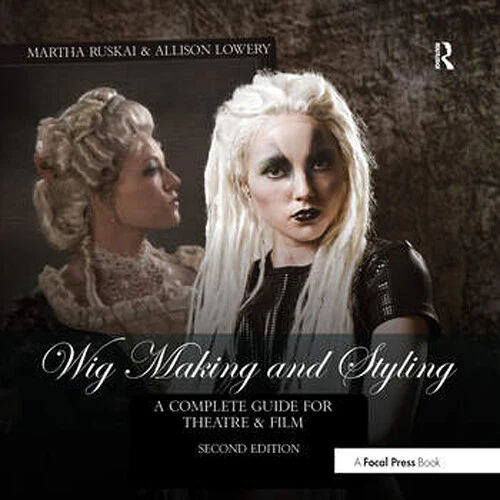
This second edition of Wig Making and Styling from Focal Press is the one-stop shop for the knowledge and skills you need to create and style wigs. Covering the basics, from styling tools to creating beards, it ramps up to advanced techniques for making, measuring, coloring, and cutting wigs from any time period. Whether you're a student or a professional, you'll find yourself prepared for a career as a skilled wig designer with knowledge of altering existing wigs, multiple approaches to solving wig-making problems, and industry best practices.
Author Martha Ruskai's thirty year career as a freelance wig and makeup artist and designer includes opera, film, print, TV, and dance. Author Allison Lowery is the Wig and Makeup Specialist for Texas Performing Arts at the University of Texas at Austin and the author of the Historical Wig Styling books. She has previously worked at the Alabama Shakespeare Festival, Utah Shakespeare Festival, the Lyric Opera of Chicago, and Glimmerglass Opera, among many other places. She is also an active freelance wig stylist, makeup artist, and wardrobe stylist.
- Glossary of Wig and Hair Terms
- Wig-Making Tool Kit
- Wig Styling Tool Kit
- Hairpins and Clips
- Rollers/Curlers
- A Well-Equipped Wig Area
- Handling a Wig
- Blocking a Wig
- Blocking Hard-Front Wigs
- Blocking Lace-Front Wigs
- Basic Hand Sewing Stitches
- Hair Prep
- Long Hair
- Nylon Wig Caps vs Fishnet Wig Caps
- Short Hair
- Prepping for Film
- How to Hold and Put on a Lace-Front Wig
- Applying Hard-Front Wigs and Falls
- Removing Wigs After a Performance
- A Word About Quick Changes and Tap Dancing
- Cleaning Wig Laces
- Cleaning Facial Hair
- Touching up a Wig
- Washing Wigs
- A Note About Hair Washing Products
- Washing the Wig off the Block
- Washing the Wig on the Block
- Storing Your Wigs
- Storage Systems
- Ventilating Needles and Holders
- Loading Your Needle
- Wig-Making Laces and Nets
- Fronting Laces
- Back/Foundation Laces
- Stretch Laces
- Other Wig-Making Materials
- The Direction and Stretch of the Lace
- Types of Hair
- Basic Wig-Knotting/Ventilating Technique
- Double Knotting
- Ventilating Positions
- Hair Density and Ventilating Patterns
- Ventilating Direction
- Untying Knots
- Color Blending
- Sewing with Invisible Thread
- Hair Punching
- Proper Head Measurements
- Transferring Head Measurements to a Block
- Plastic-Wrap Head Tracings
- Padding Out a Block with a Plastic Tracing
- Creating the Pattern for the Facial Hair Piece
- Tracing method, free hand method, & stock paper patterns
- Adding Texture to the Hair
- Individual Hairpiece Characteristics
- Eyebrows
- Mustaches
- Sideburns
- Beards and Goatees
- Cutting and Styling the Facial Hair
- Applying the Facial Hair
- Removing the Facial Hair
- Direct Application Techniques Hair
- Laid On Facial Hair
- Floating Beards
- Historical Timeline of Facial Hair Styles Gallery of Natural Facial Hair
- Cleaning Old Wigs
- Bringing Back the Shine of an Old Wig
- Dulling the Shine of a New Synthetic Wig
- Removing Weft
- Thinning a Wig with Thinning Shears
- Sewing Weft to the Underside of a Wig
- Adding Weft to Wigs
- Sewing Weft to a Pre-Made Foundation
- Piecing Together Wigs
- Full Bottom Wig
- Piecing Together Wigs to Increase Size
- Styling Tricks to Conceal the Front Edge of a Wig
- Using the Performer's Own Hair to Conceal the Front Edge of the Wig
- Fronting and Other Adaptations of Commercial Wigs
- Types of Fronts
- The Human Hairline
- Changing the Hairline
- Building the Fronts
- Variation 1
- Variation 2
- Variation 3
- Truing the Hairline
- Lace Direction and Hair Growth Direction
- Quick Front: A Step-by-Step Example
- Standard Front
- Deep Fronts
- Deep Front Variation 1
- Variation 2
- Variation 3
- Mini Fronts
- Silk Blenders
- Nape Lace
- Types of Foundations
- Building a Circumference-Band Foundation
- Vegetable Net & Caul Net/Circumference Band/Right-Side-Out/Hand Sewn
- Variations on Circumference Band Foundations
- Variations on Nape-Piece Foundations
- Variations on One-Piece Foundations
- Notes About Adding Hair
- Parts, Crown Swirls, and Cowlicks
- Miscellaneous Foundations
- Balding Wigs
- Fringes
- Sewing Weft to a Pre-Made Foundation
- Summary
- Toupee
- Graying Temple Pieces
- Pull-Throughs
- Falls
- Type 1
- Type 2
- Type 3
- Type 4
- Switches
- Kabuki-Inspired Lion Wig
- Making Custom Weft
- Using Weft to Make Clip-In Extensions
- Elements of a Hairstyle
- Straight Hair
- Wetting and Drying
- Flat-Ironing and Roller Setting
- Steaming the Hair
- Wavy Hair
- Finger Waves/Water Waves
- Marcel Waves
- Pin curls
- Waving and Crimping Irons
- Curly Hair
- Roller Setting
- Roller Setting: Ringlets/Sausage Curls
- Roller Setting: Spiral Rolling Techniques
- Spiral Curls/Medusa Set
- Braids
- The Standard Basic Braid
- French Braids
- Reverse French Braid
- Rope Braids
- Herringbone Braids
- Dreadlocks
- Break the Hairstyle Down into Sections
- Understand the Hairstyle
- Interpreting Research
- Draw Your Setting Pattern
- Set Your Wig
- Comb Out the Set
- Teasing and Stuffing
- Wire Frames
- Styling Men's Wigs
- Wig Setting and Styling Tips
- From Set to Style: Examples
- Example 1: Cosette in Les Miserables
- Example 2: 1930s Hollywood Movie-Star Look
- Gallery of Historical Hairstyles
- Dyeing Wigs and Wig Fibers
- Universal Hair Color Systems
- American Cosmetology Hair Level System
- Types of Hair Color Products
- Dyeing Protein Fibers
- Using Fabric Dyes
- Preparing Hair Bundles for Dye
- Dyeing Synthetic Fibers
- Perming Wigs and Wig Fibers
- Cutting Wigs
- Bases and Foundations
- Fosshape Bases
- Buckram and Felt Bases
- Other Types of Bases
- Covering the Cap
- Building a Structural Support Frame
- Combining Hair and Non-Hair Materials
- Working with Jumbo Braid
- Example of the Step-by-Step Process of Creating an Unusually Shaped Wig
- Gallery of Non-Hair/Fantasy Wigs
- Analyzing and Understanding the Play
- Forms of Drama
- Basic Plot Structure
- Scene Breakdowns
- Organizing Your Production Bible
- Character Design
- Group Relationships
- Designing an Overall Look for a Production
- Budgeting for a Production
- During the Production
- Wig Jobs and How to Get Them
- A Note About Unions, Licenses, and Certifications
- Charging for Your Work
- Wig Resource/Supply List
- Blank Forms for Shop Use
Allison Lowery is the Wig and Makeup Specialist for Texas Performing Arts at the University of Texas -- Austin and the author of the Historical Wig Styling books. She has previously worked at the Alabama Shakespeare Festival, Utah Shakespeare Festival, the Lyric Opera of Chicago, and Glimmerglass Opera, among many others. She is also an active freelance wig stylist, makeup artist, and wardrobe stylist. Please visit her website at www.thewigmistress.com to keep up with her many projects.
Items Included
- Focal Press Wig Making and Styling: A Complete Guide for Theatre & Film
Additional Resources
No additional resources available
Focal Press 9781032179605 Specs
| Publisher |
Routledge
|
| Publication Date |
September 30, 2021
|
| Author |
Martha Ruskai
Allison Lowery |
| Includes Images |
Yes
|
| ISBN Number |
9781032179605
|
| Cover Type |
Soft
|
| Number of Pages |
336
|
| Package Weight |
2.085 lb
|
| Box Dimensions (LxWxH) |
9.5 x 9.2 x 0.7"
|
All product and company names are trademarks™ or registered® trademarks of their respective holders. Use of them does not imply any affiliation with or endorsement by them.
Description
Focal Press 9781032179605 Overview
This second edition of Wig Making and Styling from Focal Press is the one-stop shop for the knowledge and skills you need to create and style wigs. Covering the basics, from styling tools to creating beards, it ramps up to advanced techniques for making, measuring, coloring, and cutting wigs from any time period. Whether you're a student or a professional, you'll find yourself prepared for a career as a skilled wig designer with knowledge of altering existing wigs, multiple approaches to solving wig-making problems, and industry best practices.
Author Martha Ruskai's thirty year career as a freelance wig and makeup artist and designer includes opera, film, print, TV, and dance. Author Allison Lowery is the Wig and Makeup Specialist for Texas Performing Arts at the University of Texas at Austin and the author of the Historical Wig Styling books. She has previously worked at the Alabama Shakespeare Festival, Utah Shakespeare Festival, the Lyric Opera of Chicago, and Glimmerglass Opera, among many other places. She is also an active freelance wig stylist, makeup artist, and wardrobe stylist.
- Glossary of Wig and Hair Terms
- Wig-Making Tool Kit
- Wig Styling Tool Kit
- Hairpins and Clips
- Rollers/Curlers
- A Well-Equipped Wig Area
- Handling a Wig
- Blocking a Wig
- Blocking Hard-Front Wigs
- Blocking Lace-Front Wigs
- Basic Hand Sewing Stitches
- Hair Prep
- Long Hair
- Nylon Wig Caps vs Fishnet Wig Caps
- Short Hair
- Prepping for Film
- How to Hold and Put on a Lace-Front Wig
- Applying Hard-Front Wigs and Falls
- Removing Wigs After a Performance
- A Word About Quick Changes and Tap Dancing
- Cleaning Wig Laces
- Cleaning Facial Hair
- Touching up a Wig
- Washing Wigs
- A Note About Hair Washing Products
- Washing the Wig off the Block
- Washing the Wig on the Block
- Storing Your Wigs
- Storage Systems
- Ventilating Needles and Holders
- Loading Your Needle
- Wig-Making Laces and Nets
- Fronting Laces
- Back/Foundation Laces
- Stretch Laces
- Other Wig-Making Materials
- The Direction and Stretch of the Lace
- Types of Hair
- Basic Wig-Knotting/Ventilating Technique
- Double Knotting
- Ventilating Positions
- Hair Density and Ventilating Patterns
- Ventilating Direction
- Untying Knots
- Color Blending
- Sewing with Invisible Thread
- Hair Punching
- Proper Head Measurements
- Transferring Head Measurements to a Block
- Plastic-Wrap Head Tracings
- Padding Out a Block with a Plastic Tracing
- Creating the Pattern for the Facial Hair Piece
- Tracing method, free hand method, & stock paper patterns
- Adding Texture to the Hair
- Individual Hairpiece Characteristics
- Eyebrows
- Mustaches
- Sideburns
- Beards and Goatees
- Cutting and Styling the Facial Hair
- Applying the Facial Hair
- Removing the Facial Hair
- Direct Application Techniques Hair
- Laid On Facial Hair
- Floating Beards
- Historical Timeline of Facial Hair Styles Gallery of Natural Facial Hair
- Cleaning Old Wigs
- Bringing Back the Shine of an Old Wig
- Dulling the Shine of a New Synthetic Wig
- Removing Weft
- Thinning a Wig with Thinning Shears
- Sewing Weft to the Underside of a Wig
- Adding Weft to Wigs
- Sewing Weft to a Pre-Made Foundation
- Piecing Together Wigs
- Full Bottom Wig
- Piecing Together Wigs to Increase Size
- Styling Tricks to Conceal the Front Edge of a Wig
- Using the Performer's Own Hair to Conceal the Front Edge of the Wig
- Fronting and Other Adaptations of Commercial Wigs
- Types of Fronts
- The Human Hairline
- Changing the Hairline
- Building the Fronts
- Variation 1
- Variation 2
- Variation 3
- Truing the Hairline
- Lace Direction and Hair Growth Direction
- Quick Front: A Step-by-Step Example
- Standard Front
- Deep Fronts
- Deep Front Variation 1
- Variation 2
- Variation 3
- Mini Fronts
- Silk Blenders
- Nape Lace
- Types of Foundations
- Building a Circumference-Band Foundation
- Vegetable Net & Caul Net/Circumference Band/Right-Side-Out/Hand Sewn
- Variations on Circumference Band Foundations
- Variations on Nape-Piece Foundations
- Variations on One-Piece Foundations
- Notes About Adding Hair
- Parts, Crown Swirls, and Cowlicks
- Miscellaneous Foundations
- Balding Wigs
- Fringes
- Sewing Weft to a Pre-Made Foundation
- Summary
- Toupee
- Graying Temple Pieces
- Pull-Throughs
- Falls
- Type 1
- Type 2
- Type 3
- Type 4
- Switches
- Kabuki-Inspired Lion Wig
- Making Custom Weft
- Using Weft to Make Clip-In Extensions
- Elements of a Hairstyle
- Straight Hair
- Wetting and Drying
- Flat-Ironing and Roller Setting
- Steaming the Hair
- Wavy Hair
- Finger Waves/Water Waves
- Marcel Waves
- Pin curls
- Waving and Crimping Irons
- Curly Hair
- Roller Setting
- Roller Setting: Ringlets/Sausage Curls
- Roller Setting: Spiral Rolling Techniques
- Spiral Curls/Medusa Set
- Braids
- The Standard Basic Braid
- French Braids
- Reverse French Braid
- Rope Braids
- Herringbone Braids
- Dreadlocks
- Break the Hairstyle Down into Sections
- Understand the Hairstyle
- Interpreting Research
- Draw Your Setting Pattern
- Set Your Wig
- Comb Out the Set
- Teasing and Stuffing
- Wire Frames
- Styling Men's Wigs
- Wig Setting and Styling Tips
- From Set to Style: Examples
- Example 1: Cosette in Les Miserables
- Example 2: 1930s Hollywood Movie-Star Look
- Gallery of Historical Hairstyles
- Dyeing Wigs and Wig Fibers
- Universal Hair Color Systems
- American Cosmetology Hair Level System
- Types of Hair Color Products
- Dyeing Protein Fibers
- Using Fabric Dyes
- Preparing Hair Bundles for Dye
- Dyeing Synthetic Fibers
- Perming Wigs and Wig Fibers
- Cutting Wigs
- Bases and Foundations
- Fosshape Bases
- Buckram and Felt Bases
- Other Types of Bases
- Covering the Cap
- Building a Structural Support Frame
- Combining Hair and Non-Hair Materials
- Working with Jumbo Braid
- Example of the Step-by-Step Process of Creating an Unusually Shaped Wig
- Gallery of Non-Hair/Fantasy Wigs
- Analyzing and Understanding the Play
- Forms of Drama
- Basic Plot Structure
- Scene Breakdowns
- Organizing Your Production Bible
- Character Design
- Group Relationships
- Designing an Overall Look for a Production
- Budgeting for a Production
- During the Production
- Wig Jobs and How to Get Them
- A Note About Unions, Licenses, and Certifications
- Charging for Your Work
- Wig Resource/Supply List
- Blank Forms for Shop Use
Allison Lowery is the Wig and Makeup Specialist for Texas Performing Arts at the University of Texas -- Austin and the author of the Historical Wig Styling books. She has previously worked at the Alabama Shakespeare Festival, Utah Shakespeare Festival, the Lyric Opera of Chicago, and Glimmerglass Opera, among many others. She is also an active freelance wig stylist, makeup artist, and wardrobe stylist. Please visit her website at www.thewigmistress.com to keep up with her many projects.
Items Included
- Focal Press Wig Making and Styling: A Complete Guide for Theatre & Film
Additional Resources
No additional resources available
Focal Press 9781032179605 Specs
| Publisher |
Routledge
|
| Publication Date |
September 30, 2021
|
| Author |
Martha Ruskai
Allison Lowery |
| Includes Images |
Yes
|
| ISBN Number |
9781032179605
|
| Cover Type |
Soft
|
| Number of Pages |
336
|
| Package Weight |
2.085 lb
|
| Box Dimensions (LxWxH) |
9.5 x 9.2 x 0.7"
|
All product and company names are trademarks™ or registered® trademarks of their respective holders. Use of them does not imply any affiliation with or endorsement by them.